
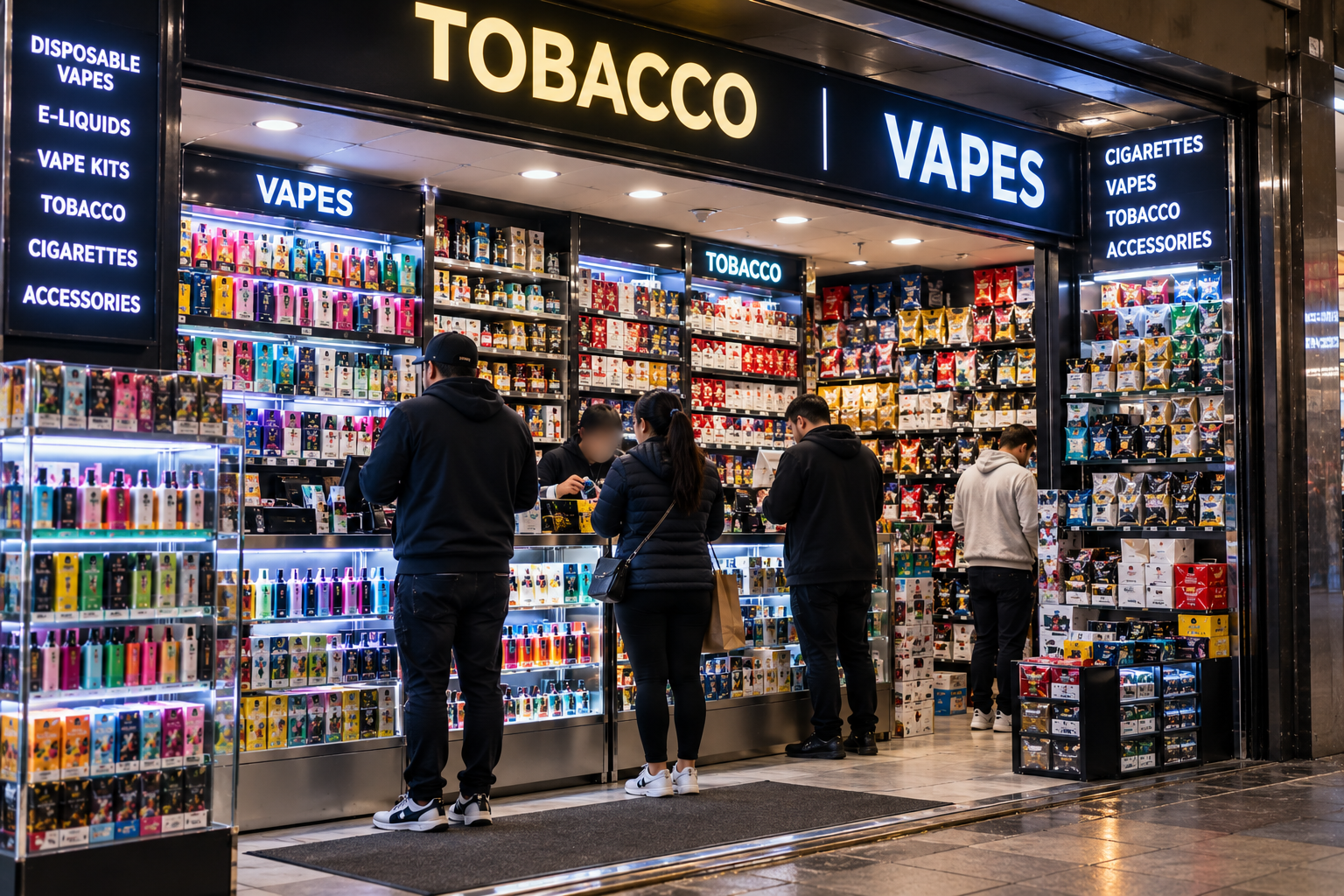
Illicit Tobacco & Vape Laws NSW: Landlord Offences

From 1 July 2026, commercial landlords in NSW can face criminal prosecution if they knowingly allow tenants or other occupiers to sell illicit tobacco or illegal vapes from their premises.
The new NSW illicit tobacco laws carry serious penalties. A commercial lessor faces a maximum penalty of one year imprisonment, a $165,000 fine, or both.
The offence forms part of the NSW Government’s broader crackdown on the illegal tobacco and vaping market. The changes have significant implications for landlords, property owners and lessors of retail and wholesale commercial premises.
New NSW Landlord Laws for Illicit Tobacco and Illegal Vape Sales
Section 11A of the Public Health (Tobacco) Act 2008 (NSW) creates the new commercial landlord tobacco offence. The Public Health (Tobacco) Amendment (Landlord Offences) Act 2026 introduced the provision.
The legislation passed both Houses of the NSW Parliament on 7 May 2026 and received assent on 13 May 2026. The new offence commenced on 1 July 2026.
Section 11A prohibits a commercial lessor from knowingly permitting another person to use premises to sell illicit goods.
The maximum penalty is:
1,500 penalty units (currently $165,000), one year imprisonment, or both.
What Must the Prosecution Prove?
To secure a conviction for this NSW landlord illicit tobacco offence, the prosecution must prove beyond reasonable doubt that:
- the accused was a commercial lessor of the premises;
- another person used the premises to sell illicit goods; and
- the commercial lessor knowingly permitted the premises to be used for that purpose.
The offence can apply even if the landlord entered into the lease or occupancy agreement before 1 July 2026.
Who Is a “Commercial Lessor” Under NSW Tobacco Laws?
The NSW tobacco laws do not only apply to traditional commercial landlords.
For the purposes of s 11A, a commercial lessor is a person who gives another person the right to occupy or use premises wholly or predominantly for retail or wholesale sales of goods or services.
An agreement can include a:
- lease;
- licence;
- sublease; or
- sublicence.
The offence can therefore apply to a broad range of commercial occupancy arrangements. It is not limited to formally documented retail leases.
The definition can also cover situations where a lessee gives another person the right to occupy or use the premises, including through a sublease.
Ordinary residential leases generally fall outside this definition. The premises must be used wholly or predominantly for retail or wholesale sales of goods or services.
What Is Illicit Tobacco in NSW?
For this offence, “illicit goods” include both illicit tobacco and illicit vaping goods.
Illicit tobacco includes tobacco that does not comply with applicable legal requirements, including relevant tobacco product and health-warning requirements.
NSW authorities have significantly increased enforcement action against the illegal tobacco trade in NSW. Businesses involved in selling illicit tobacco can face substantial fines and imprisonment.
What Are Illegal Vapes in NSW?
Illegal vape laws in NSW strictly regulate who can lawfully supply vaping products.
Illicit vaping goods include vaping products sold outside the lawful pharmacy-based scheme under Part 3A of the Poisons and Therapeutic Goods Act 1966 (NSW).
In NSW, retailers other than community pharmacies cannot lawfully sell vaping goods. This includes e-cigarettes, e-liquids and e-cigarette accessories.
Businesses that unlawfully sell vapes can therefore face serious regulatory and criminal consequences. Commercial landlords may also face liability if they knowingly permit premises to be used for illegal vape sales in NSW.
What Does “Knowingly Permit” Mean?
One of the key issues in an illicit tobacco prosecution in NSW involving a landlord will be whether the landlord knowingly permitted the sales.
The prosecution must prove knowledge beyond reasonable doubt. Negligence, carelessness or suspicion alone would not ordinarily establish actual knowledge.
However, the prosecution does not necessarily need a direct admission from the landlord. A court may infer knowledge from the surrounding circumstances and evidence.
What Does “Permit” Mean?
The word “permit” is also important when considering landlord liability for illicit tobacco or illegal vape sales.
Depending on the statutory context and circumstances, a person may permit conduct without expressly authorising it. If a landlord knows about illegal activity, has the power to intervene and fails to take reasonable steps, a court may consider whether that conduct amounts to permission.
However, inactivity alone will not necessarily prove that a landlord permitted the offending conduct.
A court may consider:
- what the landlord actually knew;
- when and how the landlord obtained that knowledge;
- whether the information was reliable;
- the landlord’s powers under the lease or occupancy agreement;
- whether the landlord reported the suspected offending;
- whether the landlord warned the tenant; and
- what lawful steps the landlord could have taken to stop the illicit sales.
As the offence only commenced on 1 July 2026, its precise operation will depend on how NSW courts interpret and apply s 11A.
Is There a Defence for Landlords?
Section 11A(2) provides a specific reasonable excuse defence for commercial landlords.
A commercial lessor may avoid criminal liability if they satisfy the court that they had a reasonable excuse for permitting the premises to be used to sell illicit goods.
The prosecution must prove the elements of the offence beyond reasonable doubt. However, the commercial lessor bears the burden of establishing a reasonable excuse.
The legislation does not exhaustively define what amounts to a reasonable excuse.
Depending on the circumstances, relevant factors may include whether the landlord:
- promptly reported suspected illicit tobacco or illegal vape sales to NSW Health or police;
- followed advice or directions from enforcement authorities;
- issued appropriate notices to the tenant;
- took lawful steps to stop the offending conduct; or
- started the process of terminating the tenancy or occupancy arrangement.
Whether a landlord has a reasonable excuse will depend on the evidence in each case.
NSW Health Closure Orders for Tobacco and Vape Shops
The new landlord offence operates alongside NSW’s strengthened tobacco and vape shop closure order regime.
NSW Health can issue a short-term closure order for up to 90 days where the Secretary reasonably suspects that a relevant breach has occurred or is likely to occur at the premises.
NSW Health can also apply to the Local Court for a long-term closure order of up to 12 months.
Relevant breaches include:
- selling illicit tobacco;
- selling illegal vaping goods; and
- selling regulated tobacco or smoking products without the required licence.
When NSW Health makes a closure order, it provides specified persons, including the owner of the premises, with information about the order.
Formal notification may become important evidence in a later prosecution, particularly when determining what the landlord knew and when they knew it.
Can a Landlord Terminate a Lease for Illicit Tobacco Sales?
Section 50J of the Public Health (Tobacco) Act 2008 gives landlords an important mechanism when premises become subject to a closure order.
While a closure order remains in force, a lessor may terminate an applicable lease or licence by giving the lessee or licensee at least 28 days’ written notice.
The legislation gives substantial protection to a lessor who lawfully uses this termination power. A person cannot bring proceedings against the lessor merely because of the termination. The lessor is also not liable for damages or compensation arising from the termination.
This protection does not prevent proceedings based on grounds unrelated to the termination.
The termination power extends to relevant retail and wholesale premises and is not limited to traditional retail shop leases.
NSW Tobacco Licensing Requirements
Since 1 July 2025, retailers and wholesalers of tobacco products and non-tobacco smoking products have required an NSW tobacco licence.
Businesses generally need a separate licence for each premises and online store.
Community pharmacies that lawfully supply vaping goods under the pharmacy scheme do not require a tobacco licence merely because they supply those vaping products.
Penalties for Selling Illicit Tobacco in NSW
Selling illicit tobacco in NSW is a serious criminal offence.
The maximum penalty is now:
14,000 penalty units (currently $1.54 million), seven years imprisonment, or both.
These substantial penalties for illicit tobacco in NSW reflect the serious approach authorities now take to illegal tobacco sales.
Possessing Commercial Quantities of Illicit Tobacco
NSW law also creates serious offences for possessing commercial quantities of illicit tobacco.
A commercial quantity is:
- 2,500 cigarettes; or
- 2.5 kilograms of another tobacco product.
Maximum imprisonment increases with the quantity:
- commercial quantity but less than 10 times the commercial quantity — 2 years imprisonment;
- 10 times but less than 50 times the commercial quantity — 5 years imprisonment; and
- 50 times or more than the commercial quantity — 7 years imprisonment.
Substantial financial penalties can also apply.
What Should a Commercial Landlord Do if a Tenant Is Selling Illicit Tobacco or Vapes?
A commercial landlord who becomes aware of suspected illicit tobacco or illegal vape sales in NSW should not ignore the information.
NSW Health encourages landlords who know or suspect that tenants are selling illicit tobacco or vaping products from their premises to report the conduct through its reporting system.
Landlords should also obtain legal advice about their obligations, potential criminal liability for illicit tobacco sales and the options available under the lease.
What Will Matter in a Prosecution?
Three questions are likely to be critical: What did the landlord know? When did they know it? What did they do about it?
Landlords should keep clear records of:
- complaints or information received;
- correspondence with the tenant;
- reports made to NSW Health or police;
- warnings or notices issued;
- steps taken under the lease; and
- legal advice obtained.
These records may become important evidence if authorities later investigate or prosecute the landlord.
Charged With an Illicit Tobacco or Illegal Vape Offence in NSW?
NSW has significantly increased the penalties for illicit tobacco offences and illegal vape offences. Some offences now carry lengthy terms of imprisonment and fines exceeding $1 million.
Commercial landlords can also face criminal prosecution if they knowingly permit premises to be used for illicit tobacco or illegal vape sales.
If NSW Health or police are investigating you for an illicit tobacco or illegal vape offence, obtaining criminal law advice before participating in an interview or providing information to investigators may be critical. Criminal Lawyers Sydney represents landlords, retailers and individuals facing investigation and prosecution under the Public Health (Tobacco) Act 2008 (NSW).
FAQ
Can a landlord go to jail if a tenant sells illicit tobacco in NSW?
Yes. A commercial lessor who knowingly permits premises to be used to sell illicit goods can face a maximum penalty of one year imprisonment, 1,500 penalty units, or both.
What should a landlord do if a tenant is selling illegal tobacco or vapes?
A landlord should not ignore credible information about suspected illegal sales. Depending on the circumstances, appropriate steps may include obtaining legal advice, reporting the conduct to NSW Health or police, issuing notices and considering rights available under the lease.
Can a landlord terminate a lease because of illicit tobacco sales?
Where premises are subject to a relevant closure order, s 50J provides a specific mechanism allowing a lessor to terminate an applicable lease or licence by giving at least 28 days’ written notice.
Can NSW Health close a shop selling illicit tobacco or illegal vapes?
Yes. NSW Health has powers to issue short-term closure orders, and longer-term closure orders can be sought through the Local Court.


